
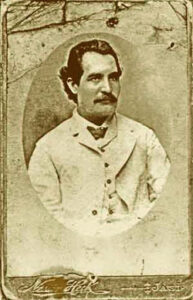
EMINESCU JAIL
Mushatin
by Mihai Eminescu
the wood is white its leaf is black
its thousand little twigs
by snow are heavy
only the wind passes through them
the cold wind and some magpie
sheding let them off
white is the night the one with moon
from the distance wood resounds
the wolves in troops mass together
blows the wind blows incessantly
grove and heaven make to me pair
mad grief comes over one
as long and stretched grief
as the county all under snow
the wood shiver like an aspen leaf
as large as one’s horizon
the wolvws over peakes race
wandering through snows
troops the crows fly
in the ground of dense woods
there is no path to get out
there’s no way there’s no boundary
neither hunter’s trace
making blizzard on snow drifts
they filled up the glades
let down on dry boughs
over shed leaves
over water over all things
in the impenetrable forest
a little house is hidden
there’s no village nor nearby road
quite alone one doesn’t know how
only from its chimney the smoke juts out
who would stay in the house
that doesnţt care for the snow
which falls and will fall
ever heap on heap
surpassing the fence in the yard
up to eaves it will reach
if left is long winter
zoung little widow
stays there quite alone
how many days are left
she doesn’t go to village any more
how long the time of a winter
how the snow is all falling
she ever winds and weaves
white threads exquisite linens
while the fire burns in the hearth
the wolves howl the gogs bark
and she spins from tow
swinging on a leg
the trough with a little child
asleep and graceful
and as she sings as she sighs
the voice of wood imitates her
in the ground of the wood
there’s no path thewre’s no way
that if ever a path existed
it turned into a valley
that if a way ever existed
it is with leaves burried
it is filled with thorns and thistle
that one doesn’t find its trace
if there is path somewhere
nobody knows it anymore
that they lost its traces
shepherd boys with the flocks
and they lost their signs
woodmen with the logs
and they forgotten the folds
hunters with the bows
nobody in the world knows any more
that around only desert
whici its borders are
where are its springs
the grass grows behold again
beaten by the summer wind
where the forest is rare
but in the beautiful grass
never a scythe entered
where the forest is dense
by its thick of wood
no axe did touch
in the ground of wood
path isn’t way isn’t
but a glade of fir trees
and a cheerful eye of pond
and a garden with stile
and a little house with trouble
and at the door of house grows
the old tile tree which shadows it
like a living covering
its flower falls without wind
shaken over the land
and on the porch who is seen
who nwaer craddle is staying
young little widow woman
who knew about herself only she
and as the wood bestirs itself
she sings for her she charms her away
swinging with a leg
she says gently
lullaby lullaby little child
I’d tell you atale
lullaby lullaby between us
I’l tell you a tale
and in models I’ll dress it
and beautifully I’ll untie it
zou to understand it only I pause
towards others I say nothing
the tears a valley fall from me
my father was a shephard
as many seconds are in year
as many shepherds he was having
with thousands flocks beside
flocks in thousands of little she lambs
little shepherds after them
haughty flocks also of sheeps
the little shepherds backwards
with flutes and bagpipes
he had also if you understand me
herds of untamed horses
which like hurricanes
were filling his plains
were grazing his estates
and in the length of rivers
they settled themselves on deserts
and in the waves of grass
were grazing the hinds and the stags
and through mountains lost in clouds
he had big herds of bisons
cold rivers cold springs
in the shadow were flowing eternally
and he had mountains and he had forests
and fortresses with fortifications
and had villages thousands and thousands
strewn on the plains
and had villages big and small ones
and full with brave men
what an uproar what a struggling
when cheerfully sounding from horn
was calling the country to boundaries
that were running with little and grown up
that they were flowing like rivers
and blackened the deserts
bitter me into a sigh
the tears are valley coming to me
with the kerchief if I whipe them
they still stronger go on
and how beautiful I was
how no one was kin by kin
of gold were my plaits
and by girls they were plaited
rosy like a peony
I was dear to everybody
they came behold they came
emperors from the east
to ask me in marriage
but they went as they arrived
kings came and messengers came
learned in many schools
with reasonable words
they asked me with justice
good time old shepherd
our emperor master
did send us to ask
if you marry your daughter or not
he answers then honestly
dear brave men welcome to you
dear’s to me to feast you
with you to get delighted
but any much you did ask me
daughter I haven’t to marry
but he emperor from the west
did come and didn’t go
two words only he told me
my heart he did subdue
he was stately and armed
an enarmoured soldier
he was stately and hale
having care of nothing
he was tall and I was tall
nice looking we were together
fitted in excess
I beautiful he beautiful
bitter me in a sigh
the tears valley come to me
with the kerchief if I whipe them
they still stronger go on
they heard and if they heard
match makers from the east
that I was going to marry
and when I just gor married
many people aroused
our house only to spoil
and to separate us
thousand of tongues were flowing as rivers
risen from the deserts
and they came mobs
risen from the forests
some on horseback some on walk
ever came in thick cloud
they came swarms came flock
and left the desert after them
they came flocks came valley
and crumbled forts in their way
vainly my man faced them
they pushed him only back
they defeated his armies
they ravished his glories
they desered the countries
they brought his fortunes
they balckened his sun
they enslaved his people
I in the deserted wood
wandering lately
I heard from foreign tongues
that my man isn’t coming any more
I learned from the west
that my man went away
by all humans followed
I learned from the east
that my man has died
that has died and was mourned
world entire was wailing him
did wail all hermitages
all orients
and wests all
and peoples tongues and crowds
midnight midday
they couldn’t awake him any more
weild behold those kings
the emperors of whole world
and a storm started
which earth drowned
midnight and westward
thousand kins put to way
big flocks and predatory
of alien peoples
which were fowing behold flowing
end they didn’t have any more
just for putting inheritence
over poor mankind
when I think to such sorrows
it seems to me they were yeasterday
when I think to my shepherds
it seems to me they were thousands years
bur when I learned
that my man has died
this linden tree I planted
grows the tile and flourishes
and shadows my life
and as in its shadow I live
I don’t get old any more
dear mother’s little child
many in world I’d tell you
but I am afraid you’d leave me
bur I am afraid you’ll understand me
and you’ll grow and will start
how the wood don’t comprise you
and you’ll go into the wide world
but you sleep more behold a bit
that you’re tender of years and little
sleep at shadow sleep on peace
that your mother will make you
under that tile tree beaten by wind
the bedding at land
when the sun will set
then the wind will drow off
and you’ll get asleep
the teeny branches will beat
and if stars will penetrate
and the moon will penetrate
our solitude
and when the wind will blow
the tile tree will rock
its flowers it will shed
and again will awake you
in the ground of the great night
and at rustling of oak trees
under the circling of clouds
in the falling of flowers
under the shining of stars
and at dance of wicked fairies
under the leaf of oak trees
at the voice of springs
where is it the cross from ways
you don’t cry more me
they grow like brothers two spruce firs
do laugh chick-abiddy laugh
where there are birds in the trees
be quiet chick be quiet
they gather girls and lads
do sleep chick heigh
stags gather the soft ones
awake chick do awake
and as she sings and sighs
the voice of wood imitates her
poor country of the high
all zour fame has gone
now five hundreds years ago
only wood you were to me
around were growing deserts
empires were crumbling
the peoples were getting old
kingdoms were fading
and forts were scatterng
only your woods were growing
green is the unpenetrated shadow
where a world is hidden
and in the shadow for ever
cold rivers were flowing
tenderly clear turning
having voices of springs
Bistritsa in rocks struggles
hrough dark forests
and ever goes deeper
where the water slightly twinkle
and at once it sees that
its watwrs hitches
and by roxks it is dammed up
it gathers and ever grows
it dam up in wondrous lake
of which waters are quiet
and trees make shadow to it
dense leaf over
in depth the water watches
and the oak trees from bank to bank
over it fall down
peaks prop up together
and make to me a tall vault
by the peaks they are knitted
and in shadow they rule
and in eternal freshness
the waves are sparkling
from one bank to another
it fell a tall trunk
it fell crosswise
that its foliage is hanging
long bridge of a tree
over a silence of lake
long bridge big bridge
that one can pass it on horse back
and Mushatin youngish
passes the bridge quiet alone
with the vest of steel
with black busby of lamb
with white thick cloth on him
how he was coming to hunt
he was carrying the bow on back
quiver of arrows he has
wih long plaits up to on back
but a forehead cutted off
little child in tight cloths
lightly is feeling himself
if he aims at a deer
the falcon flys over by him
if he holds his hand upward
the falcon put in his palm
and he ever comes shouting
and from leaf always bursting
and when starts to sing
the woods resound
hear you dear do you mother
how Mushatin is calling you
nobody was around him
only the blackbird was whistling
and he was getting down
where the water was trembling
and the blackbird says
what are you searching for boy by here
grow you wood and do you cluster
only for a path leave me room
to pass you across
only I will reach a clearing
and a spring of water
to see the falcon how it drinks
the wood says quietly
I went of leafing me out
for you did want me
and the waves sound
moving they gather
among the linens of leaf
the sun trys to penetrate
burn in the shadow at cooling
the sparkling spots
and on waves beat
the light pours flame
on clear long torrents
the rays fly like strips
under an oak long-haired oak tree
which was letting its branches down
Mushatin was lenghtenning out
putting the bow beside
you wood wood my dear
it seems I’ve told you that
you sound from leaf ever
for since I didn’t see you
much time has passed
and since I didn’t search you
much worlds I wandered
wood your majesty
let me under your foot
that I’ll spoil nothing
but only a little branch
to hang my arms in it
to hang them at my head
where I’ll make my bed
under that tile beaten by wind
with the flower upto ground
to lay with the face upward
and to sleep should deadly sleep
but to hear even in my dream
dear wood your voice
from that glade of beech
doina song sounding dearly
how wailing vibrates
that rocks my leaf
and the slowed wind
will see that I’ve got asleep
and through the tile it will rake up
and with flowers would cover me
thw wood was bowing down to him
and from branches was shaking
you Mushatin you Mushatin
cheerfully I shake my branches
and gayly I’d speak to you
long live your majesty
come Mushat to understand each other
and so choose you as our emperor
emperor of the springs
and of the deers
seated to some brook
to tear your flute from the waist
you to sing and I to sing
all my leaf to stear
to start booming in wind
on springs
from steepnesses
where the birds are flying
where the branches are bowing
and the deers are playing
the water says to him o child
hold your hand to me
come on my bright bottom
for you are beautiful child
and Mushatin answers to it
vainly you allure me in waves
vainly wood my dear
you sounds from leaves ever
that I’ll go away from you
that leaf will weep after me
that from soul it snatches me
longing-dor path longing-dor of going
and even I feel so much grief
for the weep of my litle mother
I’d go I’d ever go
longing-dor never to snatch me
and I’d go on long way
longing-dor to not reach me any more
vainly on wind are calling me
longing-dor for home longing-dor for mother
vainly it sounds in wind
that so destined I am
to make my way on earth
to hold my paths
to wander the countries
the countries and the seas
be it my voice strong
as to pass always
from everywhere I’ll be
over waters over bridges
over woods from mountains
to reach upto home
where my mother stays to weave
and to tell her in many lines
do not die mother of thoughts
don’t go you child
but if you have in world days
present them all to me
know you beloved brother
that I am not wood but fort
but since long I am enchanted
and by sleep darkened
only when the night arrives
the moon in heaven journeys
it runs through all my shadow
with its cold light
on then from horn sound to me
all trees together
griefly sounds the leaf in moon
and my world gathers
that tree after tree
all at once come untied
from oak tree with dense leaf
comes out a wondrous empress
with long hairs upto the heels
and with golden cloths
wonderful is her dress-rochia
and her name is Dochia





 Între acțiunile omenești cea mai dificilă este rugăciunea. Pentru a te putea ruga, în permanență, este nevoie de o luptă, de un “sacrificiu”, real sau simțit ca atare. Întotdeauna, când vrem să ne rugăm, suntem copleșiți de gânduri și de “probleme” care nu ar avea posibilitate de amânare. ”Probleme” care trebuiesc rezolvate, acuma, în aceste puține clipe care s-ar cuveni date rugăciunii. Este limpede că “ceva” și “cineva” se împotrivește rugăciunii, că aceleași entități se simt amenințate de rugăciune. Nu este lipsă de mare imaginație să deslușim cine este acel ”ceva” și cine este acel “cineva”. Dar acestui prim prag de împotrivire la rugăciune îi urmează altele și poate cel mai frecvent sunt gândurile de blasfemie și hulă.
 ,,A vorbi despre Poet este ca şi când ai striga într-o peşteră vastă, nu pot sunetele să ajungă până la el” (Tudor Arghezi). Cel care se exprima astfel despre Eminescu voia să sugereze imposibilitatea de a-l cuprinde în cuvinte, pentru a-l defini. În scrisoarea către Constantin Noica, din 5 martie 1970, Emil Cioran se exprima astfel: ,,…nu încetez să mă mir că a putut să apară printre noi; fără Eminescu, neamul nostru ar fi neînsemnat şi aproape de dispreţuit…”.
 Fericirea împlinirii